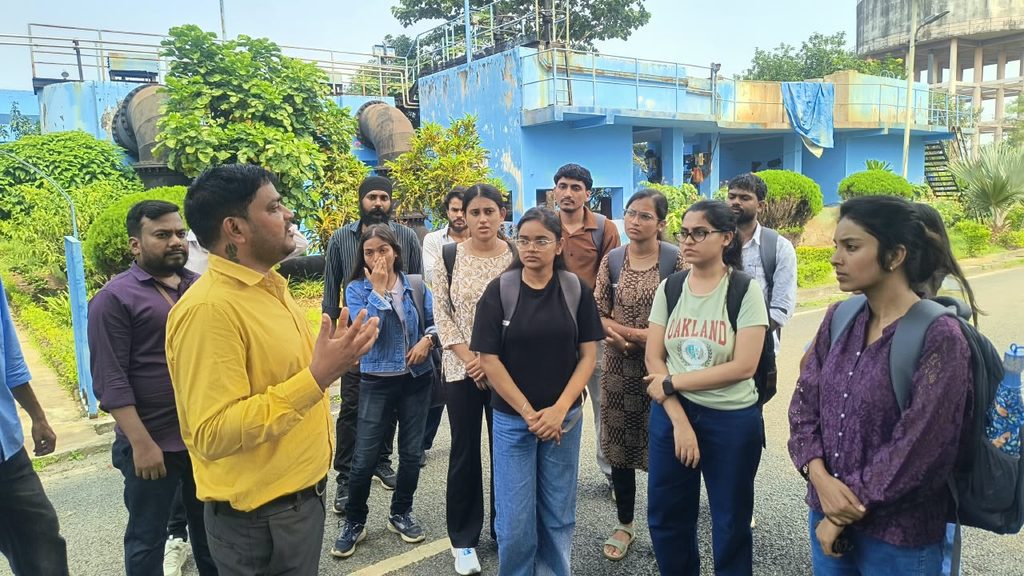
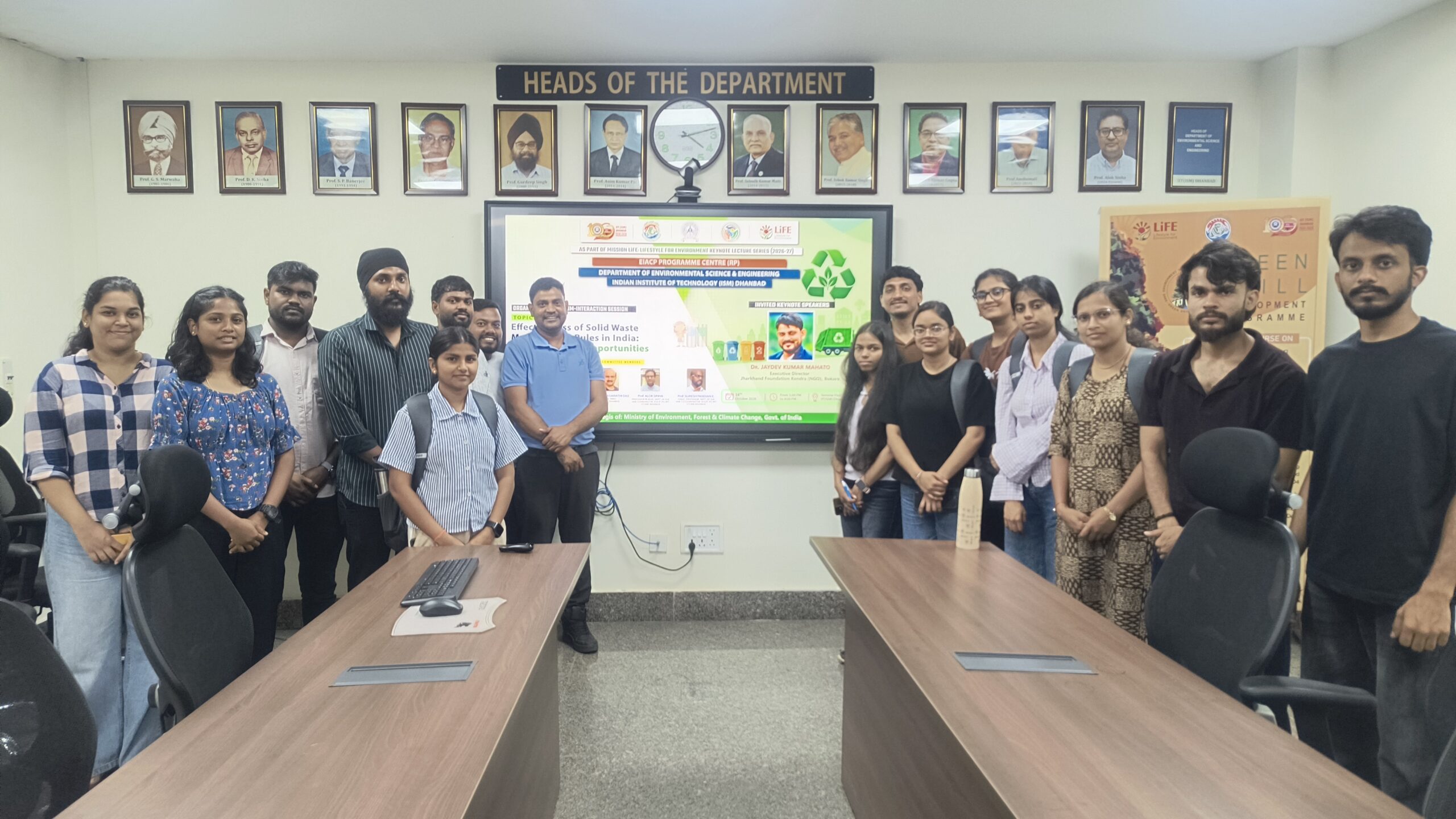
Dr. Jaydev Kumar Mahato, Executive Director of Jharkhand Foundation Kendra (JFK), was invited as a Resource Person to participate in an educational field visit to the Bhelatand Water Treatment Plant, Dhanbad, and deliver a keynote lecture at the Indian Institute of Technology (Indian School of Mines), Dhanbad [IIT (ISM) Dhanbad].
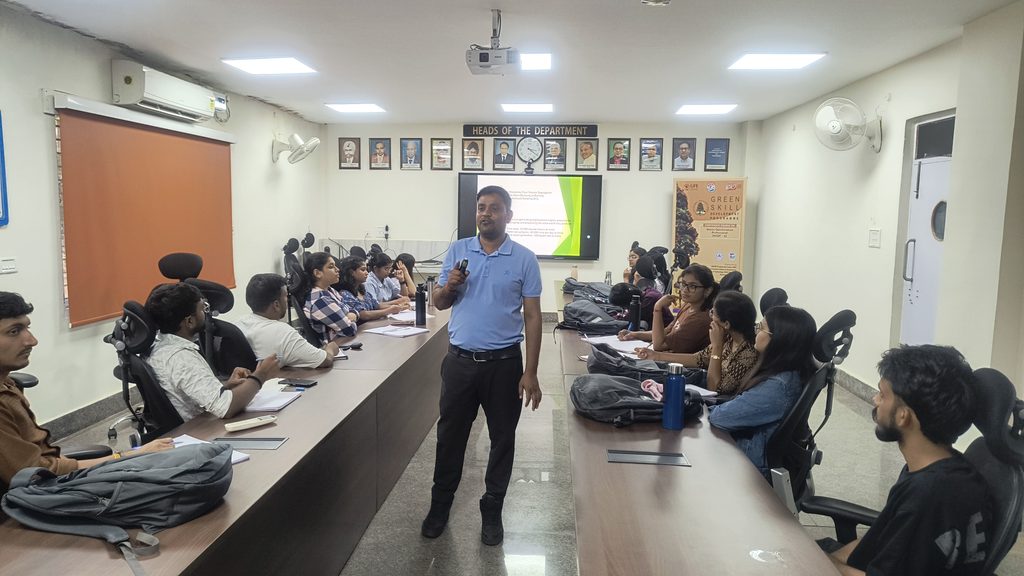
The programme was organized on 16 October 2026 by the Department of Environmental Science and Engineering (ESE), IIT (ISM) Dhanbad, as part of the Green Skill Development Programme (GSDP) Certificate Course on “Waste Optimization Professional” and the Mission LiFE: Lifestyle for Environment Keynote Lecture Series (2026–27). During the programme, Dr. Mahato delivered a keynote lecture titled “Effectiveness of Solid Waste Management Rules in India: Challenges and Opportunities.” The lecture focused on the importance of effective solid waste management, environmental sustainability, and the practical challenges involved in implementing waste management regulations in India.
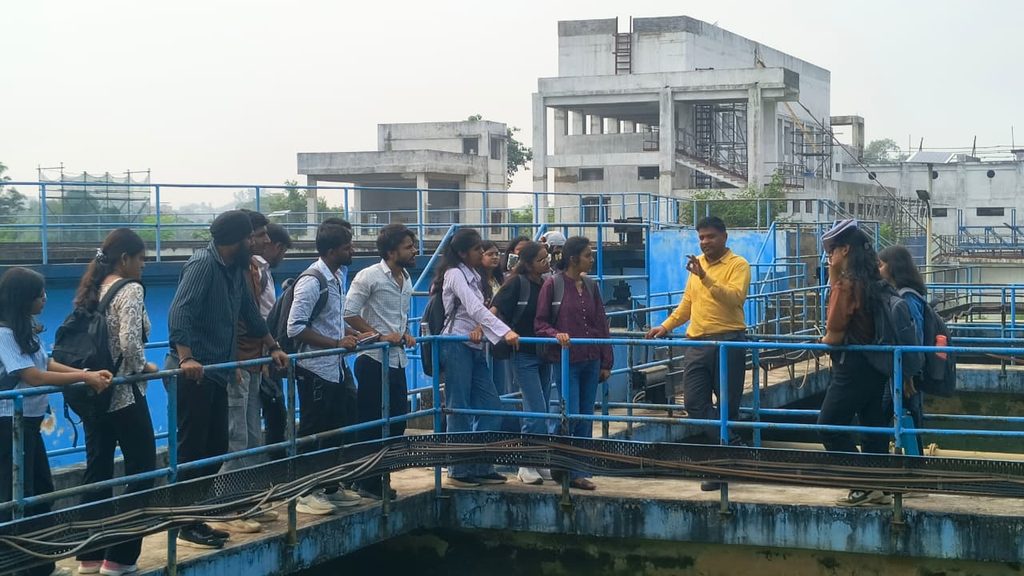
The session provided an opportunity for participants to gain insights into sustainable waste management practices and understand the importance of translating environmental policies into effective action at the grassroots level. The educational field visit to the Bhelatand Water Treatment Plant further complemented the academic programme by offering practical exposure to water treatment and resource management. Dr. Mahato’s participation reflected his commitment to environmental awareness, sustainable resource management, and knowledge sharing with students and emerging environmental professionals. Such academic engagements play an important role in bridging the gap between theoretical knowledge and practical applications while encouraging young professionals to contribute to a cleaner and more sustainable future. The initiative under Mission LiFE highlighted the importance of responsible lifestyles, efficient resource utilization, and collective efforts toward environmental protection.