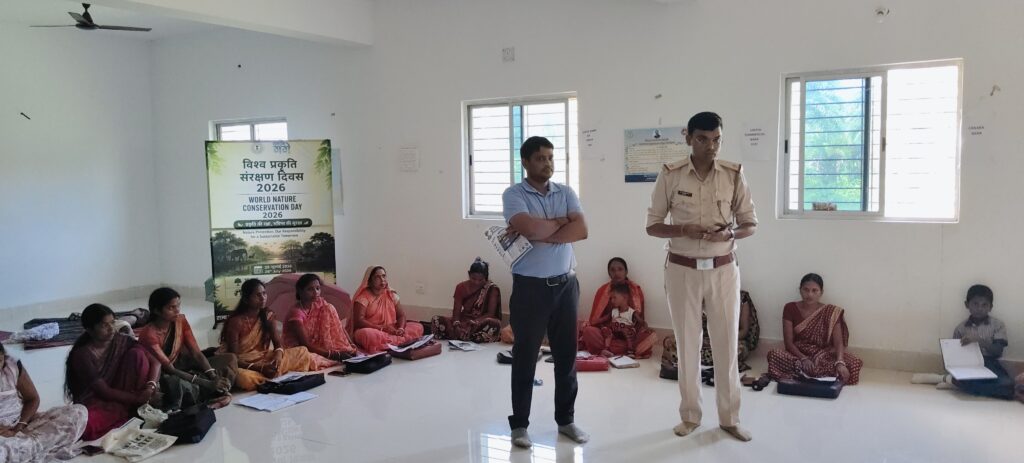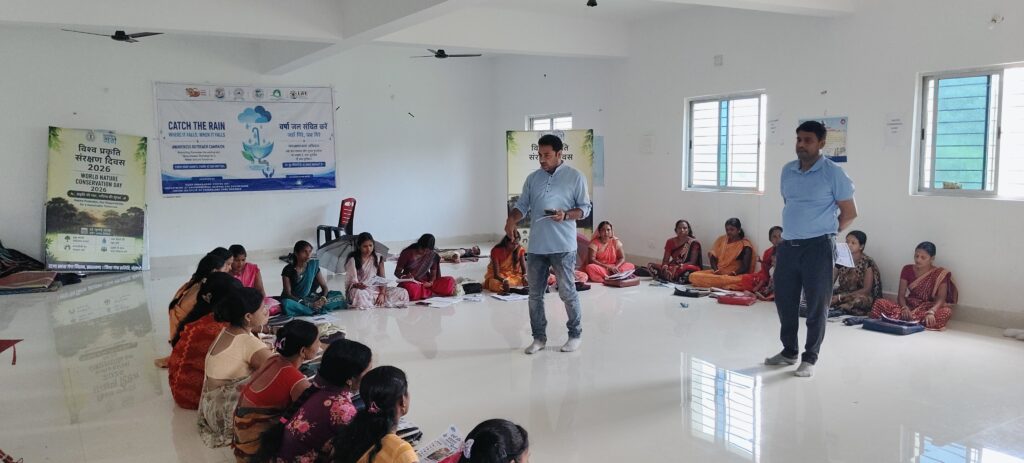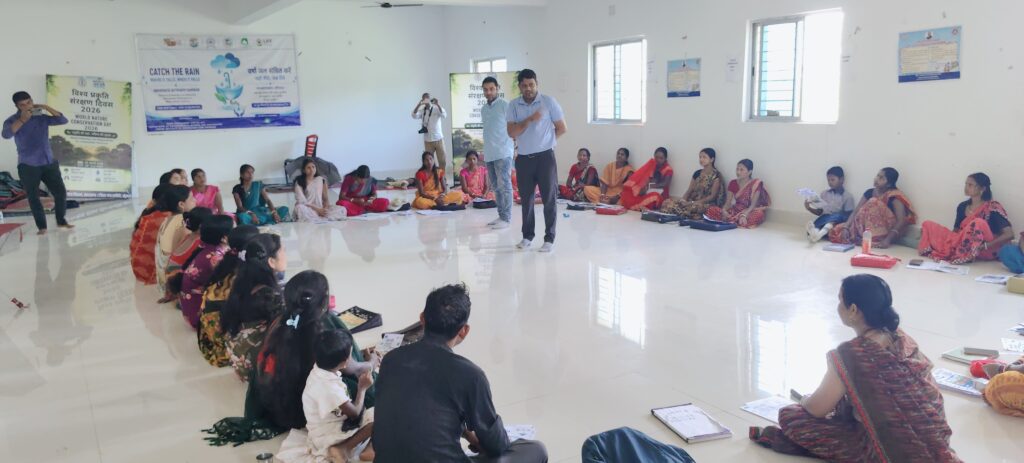
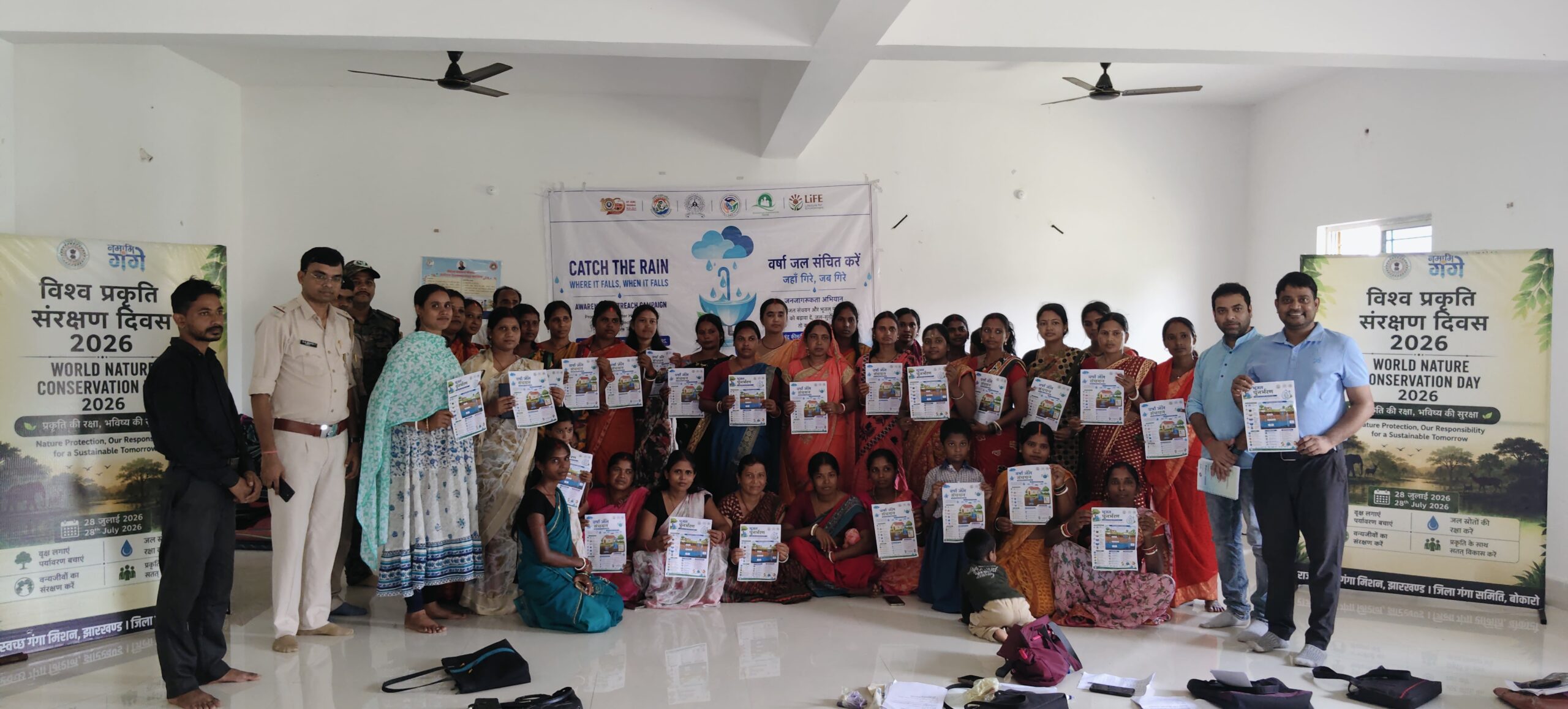
As part of the “Catch the Rain – Where It Falls, When It Falls” campaign, a rainwater harvesting awareness programme was organized for around 50 rural women at Pindrajora on the occasion of World Nature Conservation Day 2026. The initiative aimed to strengthen community awareness about sustainable water management, environmental conservation, and responsible natural resource use. The programme was jointly organized by the EIACP Programme Centre (RP), Department of Environmental Science and Engineering, IIT (ISM) Dhanbad, in collaboration with the Jharkhand Foundation Kendra (JFK), under the aegis of the Ministry of Environment, Forest and Climate Change, Government of India.
During the awareness session, Programme Officer Mr. Biswajit Das explained the scientific principles of rainwater harvesting and highlighted how harvesting rainwater can help replenish groundwater, improve water availability, and build resilience against increasing water scarcity. Dr. Jaydev Kumar Mahato, environmentalist and Executive Director of Jharkhand Foundation Kendra, emphasized the urgent need to adopt rainwater harvesting practices at the household and community levels. He spoke about the growing challenges of water scarcity due to climate change and stressed that conserving every drop of rainwater is essential for ensuring water security, supporting agriculture, and protecting the environment. He also highlighted the social, economic, and environmental benefits of community-led water conservation initiatives. The programme also featured an address by Regional Forest Officer Mr. Mahato, who discussed the importance of wildlife conservation and maintaining ecological balance. He encouraged participants to protect forests and biodiversity, noting that healthy ecosystems are closely linked to sustainable water resources.
The speakers collectively emphasized that water conservation and environmental protection are shared responsibilities. They encouraged villagers to adopt sustainable practices such as rainwater harvesting, proper waste management, reducing plastic consumption, and keeping their surroundings clean. These simple yet impactful actions can significantly contribute to protecting natural resources and creating a healthier environment for future generations. The programme concluded with an appeal to the participants to become ambassadors of environmental conservation within their communities by promoting rainwater harvesting and inspiring others to embrace sustainable lifestyles.